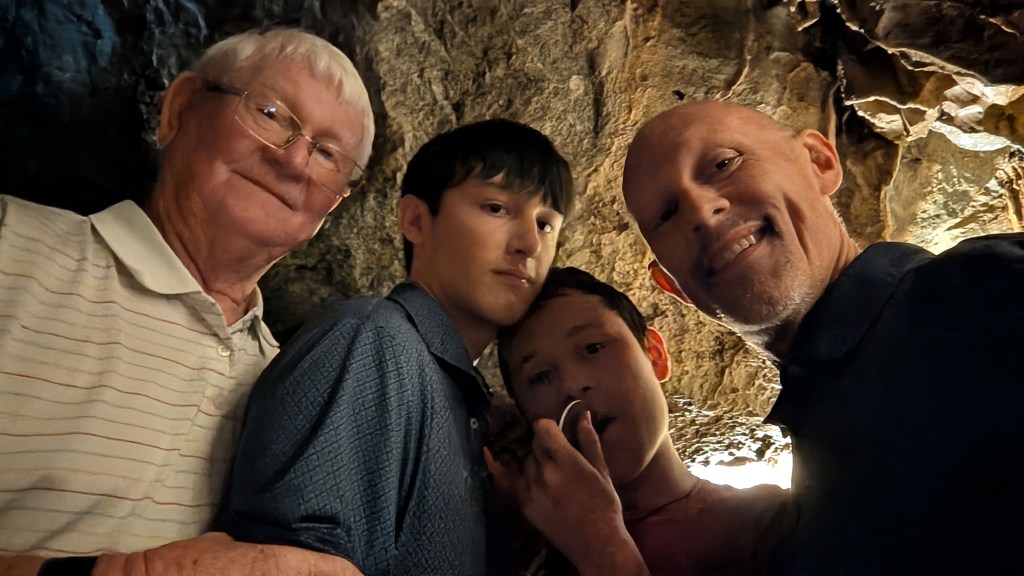
I guess it’s time for me to admit that Calderism is starting to become less mine and more Calder’s.
I’m going away to college, which means I won’t be around for every little moment anymore. I won’t be there to write down every funny thing he does or every ridiculous opinion he decides to share. For the first time, I’m going to be experiencing life away from my little brother.
Calderism was started because we wanted other people to see Cald the way we see him. We wanted people to hear his thoughts, laugh at his jokes, and understand that there is so much more to him than what people see at first. Now that I’m going to college, I want to pass that responsibility onto him.
Jack and I may have started the blog, but Cald is the reason it exists.
And as I get ready to leave for college, I thought there was no better time to share the college essay I wrote about him. It explains better than I ever could why I started Calderism, what Calder has taught me, and why I hope I can continue giving him a voice even from far away.
So before I officially pass the torch, here’s the essay that brought me to this point.
“My younger brother Calder has never told a joke, said hello, or waved to a friend. He is also the funniest, most opinionated, and most empathetic person I know. Calder is non-verbal autistic. I’ve taught him how to play catch (with an adaptive rubber ball), how to blow bubbles through a straw (an occupational therapy exercise that we turned into a game), and that rap music is the greatest form of modern expression (my parents disagree). I’ve also held him close and shown him how to be strong when kids make fun of him. But whatever I may have taught Calder, Calder has taught me so much more.
“Growing up with Calder meant growing up differently. From an early age, I had to learn how to communicate without needing words. Calder has his own language: one made up of subtle expressions, rhythmic movements, and routines that offer him comfort and order. If he’s holding his ear, it can mean anything from it hurts, or it’s too loud, or that he wants to go stargazing. To the untrained eye, all three motions look identical. But someone who “speaks Calder’s language” like me can tell the difference. I’ve become fluent in the kind of understanding that doesn’t come from speech but from observation, patience, and love.
“Being Calder’s brother also means stepping into roles others don’t have to think about. I’m an advocate, a friend, a protector, and a constant source of calm and care. Once, while we were on a plane, Calder screamed non-stop for three hours. The death stares from the passengers were bad enough, but the real misery was that I couldn’t help my brother. The only thing I could do was sit with him and remind him that I had his back. Moments like this taught me resilience. They pushed me to grow into someone who doesn’t back away from discomfort, but instead leans into it with compassion and purpose.
“Calder’s perspective on the world isn’t diminished by his silence, it’s deeper. Instead of talking, he’s observing. Someone may be smiling, but Calder will pick up on the non-verbal cues, realize the person is upset, and offer a hug. When I’m having a hard day, he’ll sit with me like he wants to remind me that he has my back.
“I admit to feeling self-conscious. When we’re out, people stare. Sometimes my friends ask awkward questions. It took time for me to realize that these uncomfortable moments aren’t about people judging us, but about people not understanding autism. To help, I write a blog called Calderism. Though he struggles with motor coordination, Calder can type on the iPad. Each sentence is hard-won and precious. Calder can be hilarious, like when he argues that snacking is a human right. And he can be profound, like when he describes the loneliness of being misunderstood. I include Calder’s typings in Calderism to give him authorship of his story. I hope that experiencing Calder in his own words gives readers a glimpse into the version of Calder I know and love, beyond the cage of his disorder.
“Watching Calder persevere inspires me to demand more of myself. I’ve taken the Calderism blog to the next level by creating a Shopify page at which I sell apparel featuring some of Calder’s typings and donate the profits to his special needs school. Because of Calderism, my brother has been featured in our local paper and received fan letters. Calder isn’t just heard. He’s empowered.
“Some people say I’ve had to grow up faster because of Calder. Maybe that’s true. But I’ve also grown up grounded in purpose. Though Calder may never say a word, he has given me a voice, that of an advocate. Whatever I do, wherever I go, I will stand next to, and have the back of, people who can’t speak.”
If you ask me what I’m going to miss most when I leave home, it will definitely be coming home from school and seeing Cald in the window with a big smile on his face and two too many iPads in front of him. Even though Jack and I are now in college, Calderism stays home with Cald. And knowing him, he’ll probably do a better job with it than both Jack and I ever did (Well Jack but I’m not so sure about me).


Leave a Reply