*Content Warning: suicidal ideation*
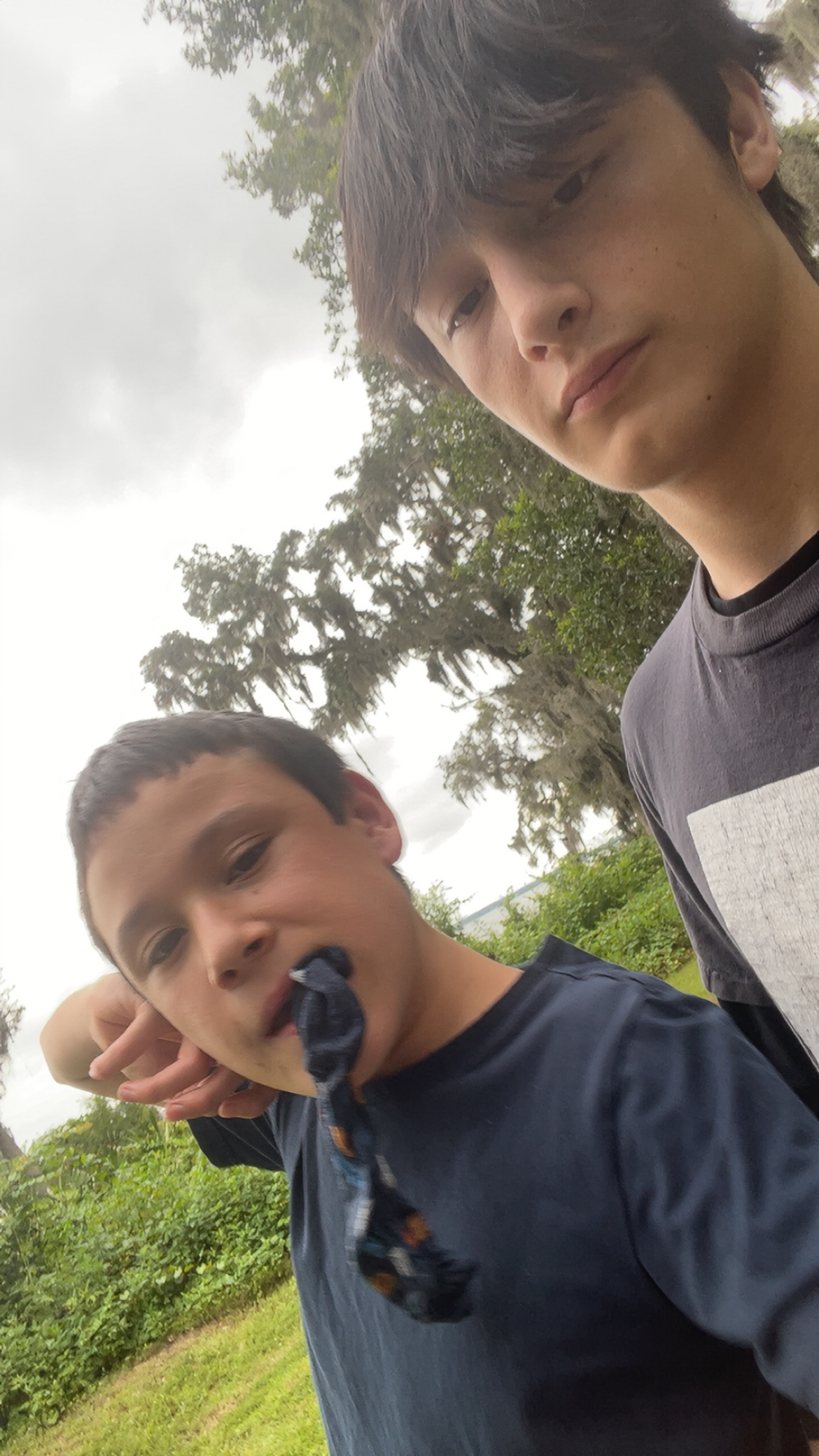
My brother Cald doesn’t talk much. He doesn’t need to. His silence holds more insight than most people’s endless chatter. Lately, that silence has become something else entirely—something that defies what we thought we knew about communication, intelligence, and connection.
We had just finished listening to The Telepathy Tapes, a podcast that explores the unexplained phenomenon of non-speaking autistic individuals who appear to communicate telepathically. Children who were once considered unreachable are spelling out messages that their parents are thinking—words, numbers, even sentences. Some researchers, like Dr. Diane Powell, a Harvard-trained neuropsychiatrist, have conducted controlled studies where non-verbal children have identified thoughts known only to someone in another room. In some trials, children scored over 90% accuracy guessing random numbers or images. Dr. Powell believes we may be witnessing a form of telepathy—a communication system science doesn’t yet understand.
One of the central figures in the podcast is a young man named Houston. He’s non-speaking and autistic, like Cald. According to his mother, Houston claims he can hear people’s thoughts and speaks with other autistic individuals on something he calls “the Hill”—a kind of shared mental channel that only a few are tuned into.
But here’s what stunned us: we never mentioned Houston or “the Hill” to Cald, so when my mom asked Cald if he could talk telepathically, he mentioned a few friends he knows in person, and then he added, “I try talking to Houston but he cannot hear me yet”. Skeptics would say he overheard us, but my mom and I listented to the podcast on a road trip to UNC Chapel Hill and we had no prior talk about the podcast. We hadn’t discussed Houston. Not out loud. Not even in passing. We were saving it for a later conversation. And Cald—who is not known for making up stories or “playing along”—delivered the name and the concept as if it were simply true.
Naturally, we wanted to see what else he could do. One by one, each of us silently chose a number between 1 and 10. We also tested him on animals we were thinking about. Cald guessed them all. Not most. All. No prompting, no coaching. Just an eerie calm, and the right answer every time.
Still, none of it compared to a potential event where no one knew he was possibly the only help.
I was having a really dark mental health moment. I mean really dark. Thoughts were storming through me and I was beating myself up emotionally and this churning, hateful voice inside of me made me question my worth. Did I really matter? I went into the garage, door closed, no lights, and sat there, sinking deeper and deeper. All of a sudden my mom threw open the garage door, and snapped on the light, exclaiming how Cald told her to check on me. I had never mentioned to anyone what I was thinking, but Cald knew. He saved me. Without asking. Without explanation. Just knowing.
Many researchers argue that telepathy in autistic children isn’t real—that what we’re seeing is wishful thinking, or the result of subtle, unconscious cues. But science begins with the unknown. And what’s happening with children like Calder is real.
Whether it’s actual telepathy, hyper-empathy, or a deeper level of human connection that we’re just beginning to glimpse, Cald seems to live in a world slightly beyond ours. A quieter one. One where communication isn’t about noise, but truly understanding people. He has the power to tap into places no one can reach with words. He senses our deepest emotions, and even though Calder can’t speak, he fills us with comfort, wisdom, light, and love. No matter how much despair I feel, Calder has taught me I will never be alone. He will always be by my side.


 Autism | Calderism
Leave a reply to Rosemary Posehn Cancel reply